

In Hong Kong, we often associate ‘anti-ageing’ with expensive skincare products or aesthetic clinical treatments. However, the true markers of ageing usually show up in our physical structure first: rounded shoulders from long office hours, tight hips, compressed spines and a highly stressed mind that struggles to achieve restorative sleep.
When your posture and structural alignment collapse, it restricts deep circulation and vital energy flow, leaving you feeling chronically fatigued.
To reclaim your natural vitality, you must address the health of your deep connective tissues. Whether you are a beginner or an experienced practitioner, stepping into a dedicated yoga studio Hong Kong and applying these three physical yoga tips HK will help you re-engineer your longevity from the inside out.
1. Deep Release: Target Fascia Decompression to Erase Joint Stiffness
Sitting at a desk for 8-10 hours a day dehydrates your fascia (the continuous web of connective tissue wrapping your muscles) — leading to chronically tight hips, locked shoulders and a stiff lower back.
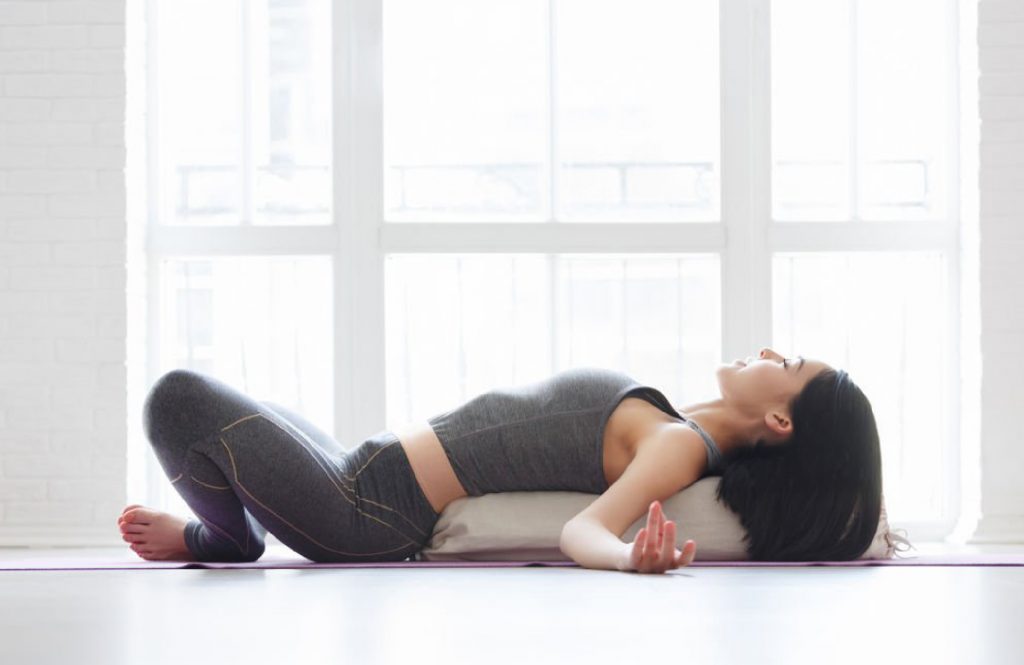
How to apply it: Active, fast-paced stretching only provides temporary relief to superficial muscles. For lasting structural repair, you need the targeted approach of restorative yoga Hong Kong. Practise passive floor postures (such as Pigeon Pose, Sphinx or Butterfly) and hold them with bolster support for 3-5 minutes. This slow, unforced pressure allows the deep fascia to rehydrate, stimulating collagen production and restoring natural, youthful elasticity to your joints.
2. Stress Reversal: Master Parasympathetic Breathing (The 4-7-8 Technique)
The fast, hyper-stimulated lifestyle of Hong Kong often causes us to default to shallow, rapid chest breathing. This unconsciously triggers our ‘fight-or-flight’ response, keeping cortisol (the stress hormone) levels high and accelerating cellular ageing.
How to apply it: Regulate your nervous system instantly using Pranayama (yogic breath control) with the 4-7-8 method. Inhale quietly through your nose for 4 seconds, hold your breath for 7 seconds and exhale completely through your mouth for 8 seconds. Repeat this for 4-8 cycles. This pattern activates the vagus nerve — immediately lowering your heart rate, releasing tension in your face and shoulders, and preparing your body for deep, self-healing sleep.
3. Maintain Suppleness: Mobilise Your Spine in All Three Directions
There is a timeless saying in yoga: “You are only as young as your spine is flexible.” Your spine houses your central nervous system; when it becomes compressed and rigid due to sedentary habits, it directly compromises your overall wellness in Hong Kong.
How to apply it: Ensure that your weekly practice moves your spine through its three natural anatomical pathways:
Flexion & Extension (Cat-Cow): Gently mobilises the vertebrae and stimulates spinal fluid
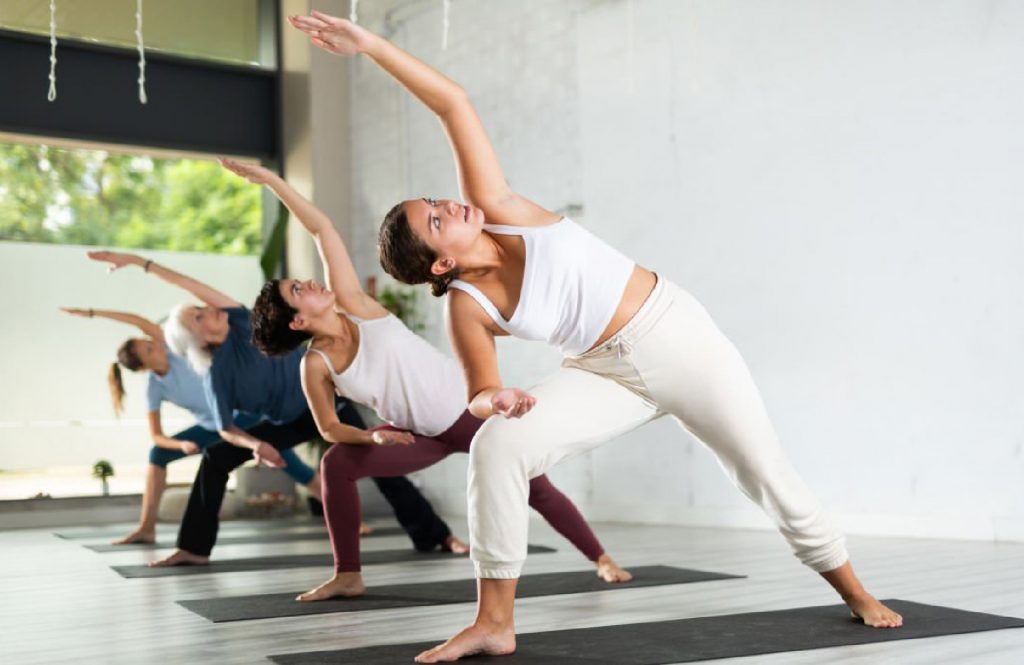
Lateral Bending (Side Stretches): Opens up the rib cage, expands lung capacity and decompresses the torso
Rotation (Spinal Twists): Gently rotates the spine, acting like a wringing motion to squeeze out tension and nourish the intervertebral discs
Flowing your body through these three planes daily preserves spinal space, improves your posture and keeps your body moving effortlessly.